Products and configurations to compare
OutRun Deluxe
Arcade1Up currently lists OutRun, Turbo OutRun, OutRunners, Power Drift and Rad Rally on the Deluxe.
Best when: you want the current wheel/pedal cabinet without paying mainly for screen/cabinet scale
Watch for: 17-inch screen and shorter shell
OutRun Supreme
The current Supreme uses a 19-inch BOE 5:4 display and a full-size Supreme cabinet while keeping the same five-game family.
Best when: you want the 19-inch display and taller 67-inch shell
Watch for: price premium does not buy a broader game list
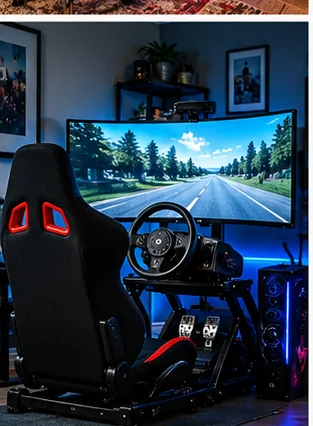
PC/console racing simulator
A simulator rig is a different product category but deserves cross-shopping if wheel feel matters more than OutRun nostalgia.
Best when: you want force feedback and modern racing titles rather than a dedicated classic cabinet
Watch for: takes more setup and looks less like a traditional arcade upright
The controls are the reason this cabinet exists
OutRun without a wheel and pedals is not the same purchase. Both current Arcade1Up versions are built around the dedicated racing control set.
Display size changes immersion more in a racer
You sit or stand farther from a racing screen than a maze-game screen, so 19 versus 17 inches is perceptually meaningful.
The five-game list is the same basic proposition
Do not pay the Supreme premium expecting a giant software expansion. The cabinet scale and screen are the principal upgrade.
Dedicated classic racer vs force-feedback simulator
Arcade1Up recreates a classic arcade control concept. A modern force-feedback wheelbase can deliver far richer steering torque and simulation, but the room looks like a sim rig rather than an OutRun machine.
Pedal placement needs floor planning
A cabinet's footprint does not include comfortable foot space. Leave enough depth that the pedals do not push the player into a walkway.
Cabinet art is not the same as control compatibility
The fastest way to buy the wrong home arcade is to shop by logo first. Pac-Man wants a clean four-way joystick experience. Street Fighter wants six action buttons and a comfortable two-player panel. Centipede depends on a good trackball. Driving games need wheel and pedal geometry. The cabinet that looks best in the room may be the one you play least if its controls do not match the games you actually care about.
Game count is equally slippery. Three games you love can be worth more than 300 games you scroll past. Treat the game list as a collection, not a spec-sheet score. A dedicated licensed cabinet is strongest when the physical controls and art reinforce a small set of games; a multicade is strongest when breadth and convenience matter more than one iconic presentation.
Home-scale and commercial-scale machines solve different problems
Consumer cabinets are lighter, easier to move through houses and much cheaper to power and service. Commercial machines are deeper, heavier and often more durable, but freight, stairs, doorways and replacement parts become real ownership issues. The right home arcade often mixes one or two special full-size machines with lighter consumer cabinets rather than trying to recreate an operator warehouse.
Before checkout
- Measure final cabinet footprint and player standing space
- Measure the entire delivery route before ordering
- Confirm game list, control layout and number of players
- Check screen size and viewing angle from normal stance/seating
- Confirm Wi-Fi/Ethernet needs and whether online features are optional
- Price stools, risers, mats and surge protection with the machine
- Check warranty, freight damage and return terms
- Confirm replacement controls or parts are realistically obtainable
- Plan ventilation and service access
- Use only game/software content you have the rights to run
Installed cost: the part listings do not show
Budget freight or local pickup, stools or seating, floor protection, surge protection, network access, extension of an existing wired network where appropriate, and an initial parts reserve. If a machine requires permanent electrical work, treat that as room infrastructure rather than hiding it inside the cabinet price. A collection that arrives under budget but has no comfortable place to stand or sit is not actually under budget.
Measure the route with packaging in mind when a machine ships assembled or partly assembled. Door width is only one constraint; stair turns, ceiling height, railings, elevators and the ability to rotate a long cabinet matter. HomeArcadeGuide's doorway and shipping planners exist to catch those mistakes before freight arrives.
How to evaluate the purchase in the first week
Play the games and controls you bought it for, not only the easiest title on the menu. Test every direction/button, both players, audio at quiet and loud levels, network reconnect after power-off, display uniformity and cabinet wobble. If it is a virtual or software-driven platform, update only after confirming the current machine works and documenting its starting state.
Keep the carton and packing material until the return window and freight-damage inspection are safely behind you. Large arcade products are unusually expensive to return, and original packaging can matter if a display or control panel needs to travel for service.
Frequently asked questions
How big is the OutRun Deluxe screen?
Arcade1Up currently lists a 17-inch BOE display.
How big is the OutRun Supreme screen?
A 19-inch BOE 5:4 display.
Do they have the same games?
Current official lists show the same five Sega racing games.
Which is taller?
Supreme at about 67 inches versus roughly 60.7 inches for the current Deluxe page.
Primary/current sources
Affiliate disclosure: HomeArcadeGuide.com may earn from qualifying purchases through Amazon Associates and eBay Partner Network at no extra cost to you. Manufacturer links in the source section are research references, not tracked endorsements.