Know your wall before you pick the decor
Decor choices start with what the wall is made of. Drywall, plaster, brick, concrete block, wood paneling and basement masonry all hold hardware differently, and the right anchor for a heavy sign on drywall is not the right one for brick. Find studs where you can, and read the hanging hardware's instructions for the wall type and the load it is rated for.
Next, check the weight of the item from the listing, not from a guess. Glass neon, framed glass art and solid shelves are heavier than they look. If the listing gives no weight, ask the seller or choose a lighter piece. When in doubt, use more anchors, not fewer, or have a handyperson install it.
Finally, map the room. Cabinets, a pinball backbox and a racing seat all need walking and standing space, so put wall pieces where they will not be bumped. The arcade room layout guide helps you decide which walls are free.
Neon signs: glass or LED
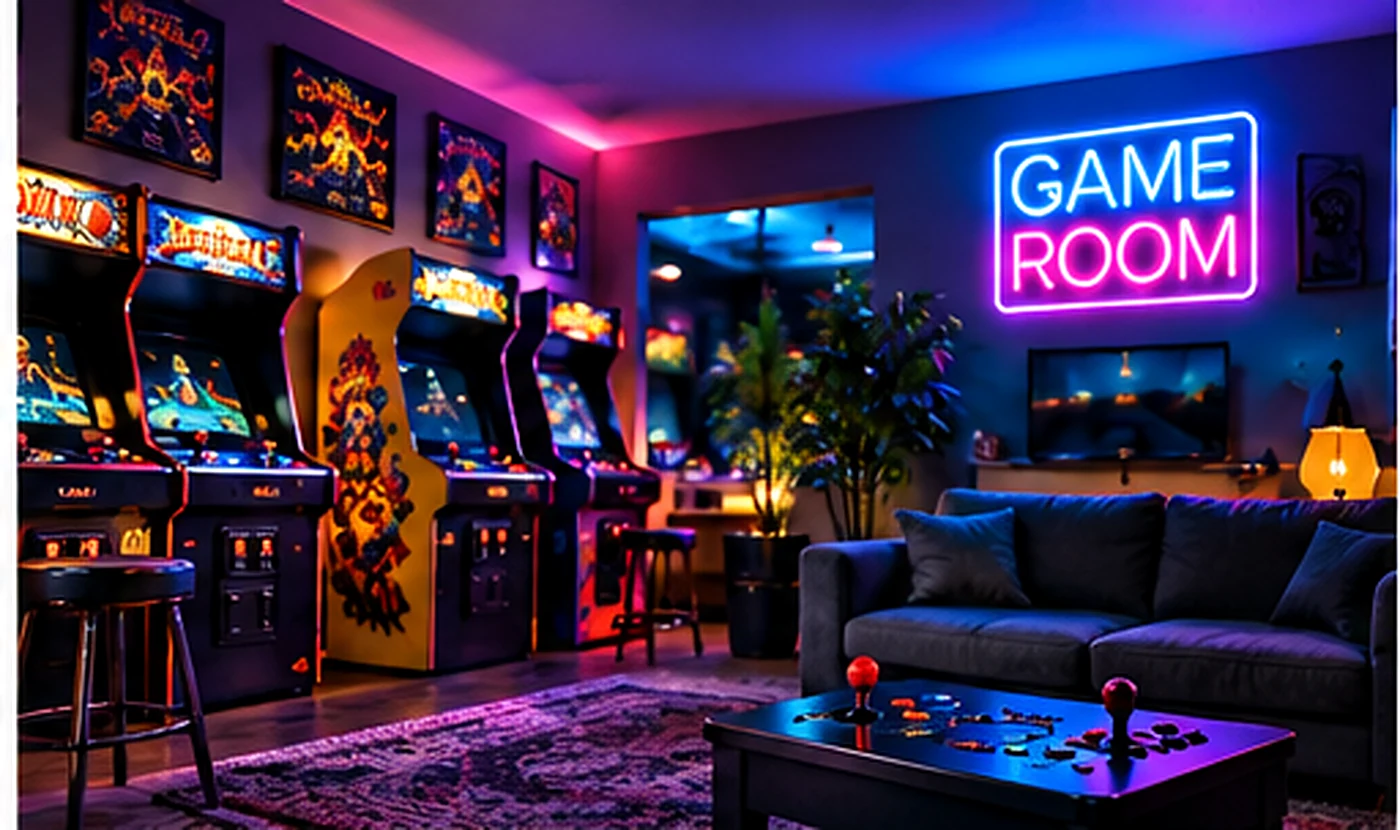
A neon sign is the classic arcade accent. There are two broad types. Real glass neon is fragile and uses a transformer that operates at high voltage. LED neon-style signs use a flexible light strip and usually a low-voltage adapter. Both look good on a wall, and they differ in weight, heat and handling.
For either, follow the maker's instructions for mounting and power. Do not open a glass neon transformer or modify a sign's wiring. If a sign flickers, buzzes or runs hot, unplug it and contact the seller or a qualified technician. Hang signs where kids and elbows will not reach them, and where cords can run to an outlet without crossing a walkway.
Think about power too. A sign adds to the load on the same circuit as your cabinets. The site's electrical load estimator helps you see what a room is already asking of its outlets, and any change to wiring belongs with an electrician. Use a surge-protected strip where the sign's instructions allow it, and do not daisy-chain power strips.
As an eBay Partner, I may be compensated if you make a purchase.
Posters, prints and framed art
Posters are the cheapest way to make a game room look finished. Pick a size that matches the wall section rather than the biggest one you can afford, and think about frames. Acrylic is lighter than glass and less risky to hang, though it can scratch. Glass gives a crisp look but adds weight and a glare surface.
Direct sunlight fades inks over time, so avoid hanging prints opposite a bright window. A mat or spacer keeps the print off the glazing. For vintage flyers and original art, look into conservation framing, and do not trim or tape a rare piece.
Many people frame cabinet art or marquees. Handle original artwork gently, and learn what you have before you decide to display, replace or restore it.
Glare near screens
A screen reflects whatever is behind the player. Glossy frames, mirrors, glass art and bright signs opposite a cabinet can bounce into the player's eyes and wash out the picture. Before you drill, hold the item against the wall and check from the playing position. Move it away from direct lines to the screen, choose matte frames or acrylic, and keep bright signs to the side or behind the player.
Warm, dimmable room lighting is easier on the eyes than a single bright overhead. The lighting guide covers how to balance accent light and screen visibility. Keep accent lights off the screen itself so contrast does not suffer.
Quick comparison
Use this table to sort a decor idea before you buy.
| Decor piece | Wall check | Screen-glare check | Power |
|---|---|---|---|
| Glass neon sign | Heavy and fragile; use rated hardware | Bright; keep away from screen lines | Transformer; follow maker's instructions |
| LED neon-style sign | Lighter; check the mounting method | Bright; place beside or behind players | Low-voltage adapter, but still takes an outlet |
| Framed poster, glass | Weight scales with size | Glass can reflect screens | None |
| Framed poster, acrylic | Lighter, easier to hang | Less reflective in many cases | None |
| Shelf with collectibles | Check wall type and shelf rating | Glossy items can reflect | None |
| Light strip accent | Adhesive may mark paint | Keep off screens | USB or adapter |
Spend on the room, not just the wall
Decor competes with machines for budget. If you are still planning the room, the four-machine room plan shows how to balance cabinets, seating and extras. If you have already bought a machine, a few well-placed pieces beat a wall full of random items. Pick a theme, such as a single game era or a color, and let the cabinet art lead the decor; the best home arcade cabinet guide and what to buy after your first cabinet help you decide what the room is built around. A cluttered wall near a pinball backbox or a cabinet marquee competes with the lit art you spent money on.
If you are giving decor as a gift, the gift ideas by type of player explains how to size gifts to the room, and the stocking stuffers list covers small ones.
Frequently asked questions
Are neon signs safe in a game room?
They can be, if you follow the maker's mounting and power instructions. Glass neon uses a high-voltage transformer, so do not open it. LED signs use an adapter and have their own instructions.
How do I hang a heavy sign or frame?
Check the wall type, find studs where possible, and use hardware rated for the item's weight. If you are unsure, ask a handyperson.
Will wall art reflect on my cabinet screens?
It can. Glass frames, mirrors and bright signs opposite a screen cause reflections. Check from the playing position and use matte or acrylic frames.
Should posters be framed in glass or acrylic?
Acrylic is lighter and less reflective in many cases but scratches more easily. Glass looks crisp but adds weight and glare. Keep prints out of direct sun.
Do signs affect the electrical load?
Yes, every plugged-in item adds to what the circuit carries. Use the electrical load estimator as a guide, and have an electrician handle wiring changes.
Affiliate disclosure: HomeArcadeGuide.com may earn from qualifying purchases through Amazon Associates and eBay Partner Network at no extra cost to you. Manufacturer links in the source section are research references, not tracked endorsements.