
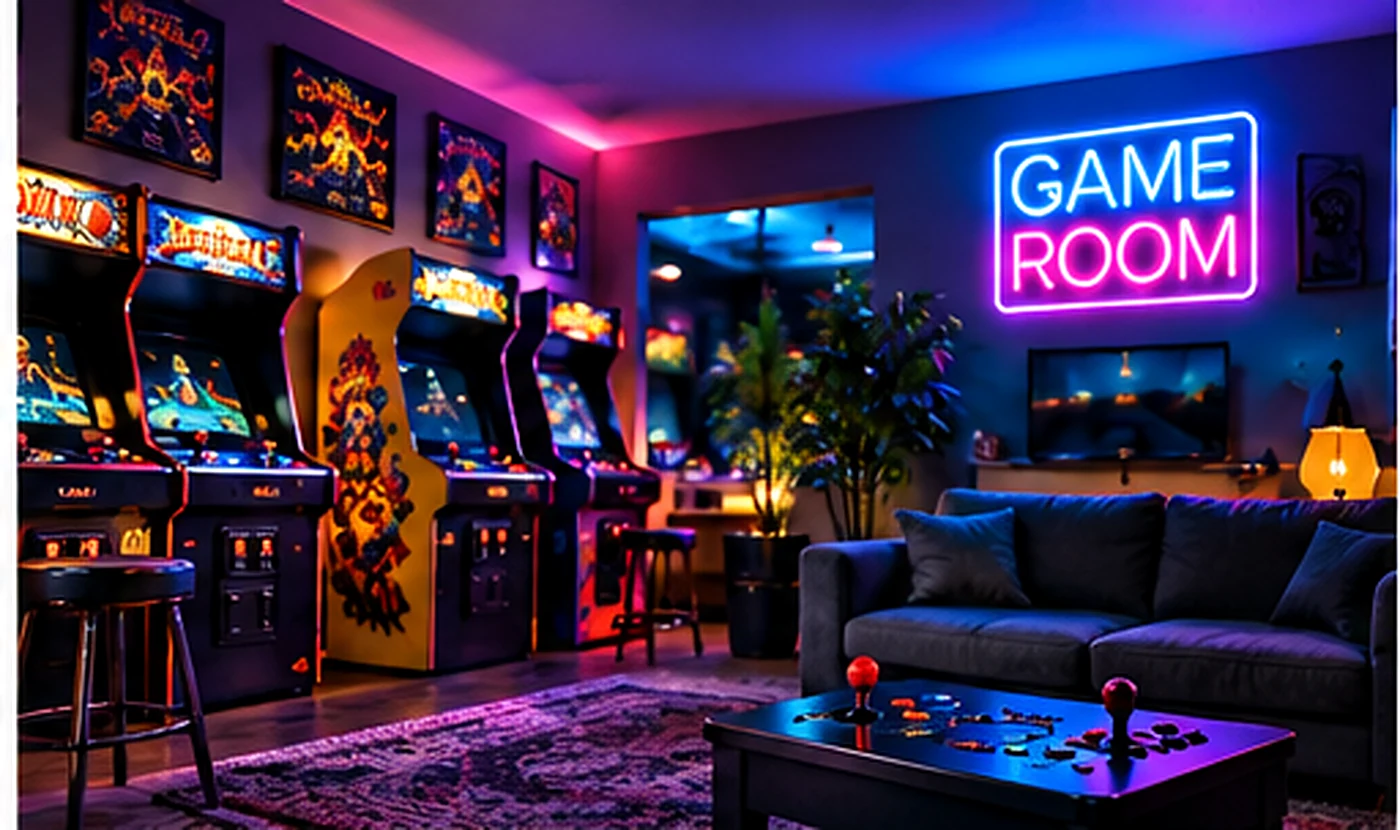
A good home arcade is a room system, not a pile of cabinets. Space, electrical service, delivery routes, heat, seating, support and household preferences determine whether a machine remains enjoyable after the novelty wears off.
1. Define the room
A home arcade feels better when movement is effortless. Keep aisle width, seating, children or guests, cabinet depth and access panels in the plan so the room can be used and maintained without shuffling machines every weekend.
2. Create a scaled floor plan
Measure the room as a system rather than counting empty wall feet. Mark outlets, door swings, vents, windows, seating and service clearance, then place the largest or least-flexible machines before filling the remaining space.
As an eBay Partner, I may be compensated if you make a purchase.
Browse Build A Home Arcade on eBay →3. Check electrical capacity
Power reliability is part of game reliability. Check cords and plugs, keep ventilation around power supplies, label circuits if the room is dedicated, and do not treat a tripping breaker as something to solve with a larger extension cord.
4. Measure delivery routes
Measure the delivery route with the machine in its shipping or assembled configuration, not just the cabinet body. Record door width, tight turns, steps, elevator openings and the final approach so the machine does not arrive before you discover the impossible corner.
5. Choose machine categories
Start with the experience, then pick the platform. List the games, player count and specialty controls you care about, and verify that the cabinet’s software, inputs and support ecosystem can deliver them without a chain of unsupported hacks.
6. Budget support and parts
Separate purchase price from ownership cost. Add delivery, likely wear items, adapters, controls, storage and any PC or display upgrades, then compare that number with a machine that arrives ready to play.
Related resources
Affiliate disclosure: qualifying purchases through some merchant links may generate a commission. Recommendations remain editorially independent.
Ready to start browsing?
See current Build A Home Arcade listings on eBay →